
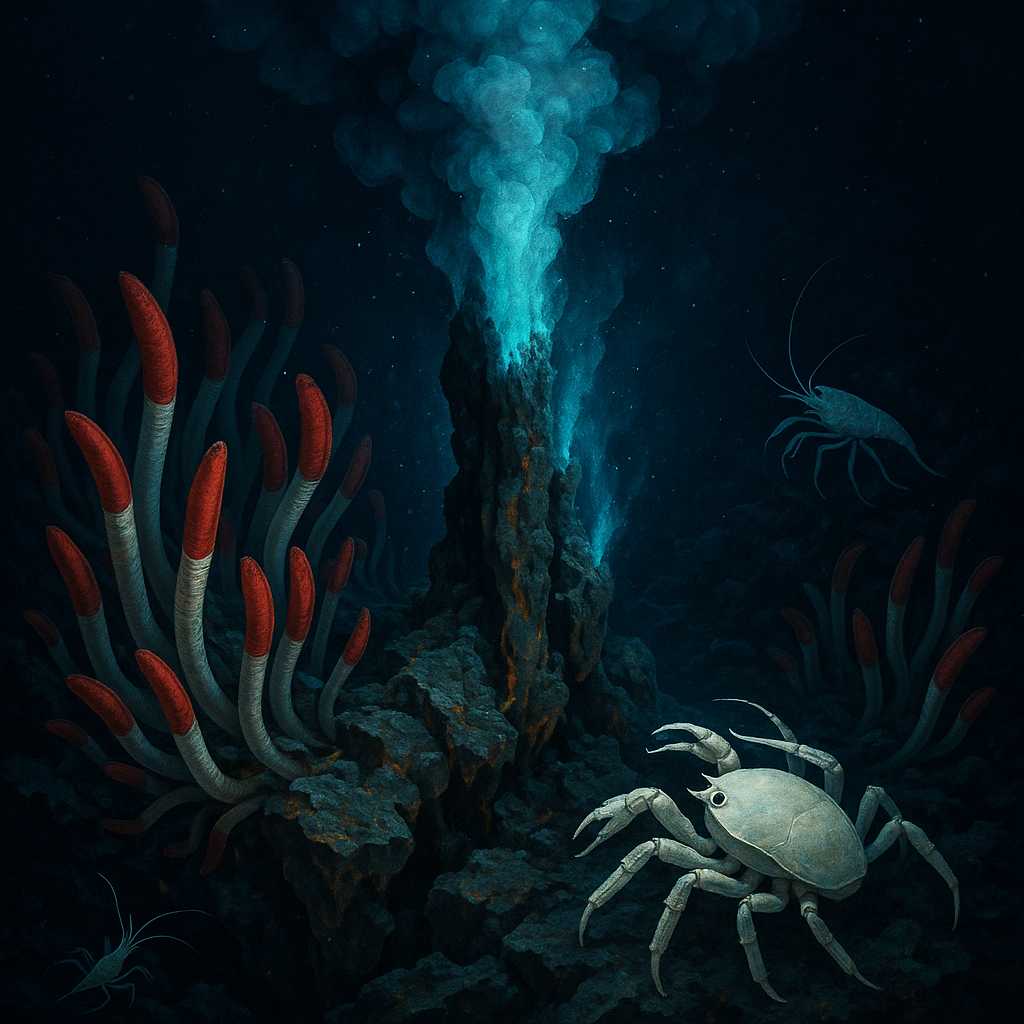

When we think of the origins of life on Earth, teeming warm ponds and sunlit shallows often come to mind. Yet, some of the most astonishing clues are being found in the pitch-black, high-pressure depths of our oceans—around hydrothermal vents. These exotic underwater hot springs are quietly rewriting our understanding of biology, chemistry, and even the possibilities for life beyond Earth.
What Are Hydrothermal Vents?
Discovered only in the late 1970s, hydrothermal vents are fissures in the Earth’s crust, usually found along tectonic plate boundaries. Here, seawater seeps down, is superheated by underlying magma, and bursts back into the ocean laden with minerals. In these seemingly inhospitable conditions—where sunlight never reaches and pressures would crush a submarine—thrives one of the most vibrant ecosystems on the planet.
Life in the Dark: Nature’s Chemical Alchemy
Unlike most life which relies on sunlight for energy, hydrothermal vent communities are powered by chemical energy. Microbes near the vents use a process called chemosynthesis, enabling them to convert minerals and gases into organic material. This forms the foundation of an entire food web, from giant tube worms to unique species of shrimp and crabs—all adapted to live in boiling, toxic conditions.
Breakthroughs and New Theories
Research at hydrothermal vents has already led to remarkable breakthroughs. The enzymes harnessed from vent organisms are used in DNA research and industrial processes, thanks to their resilience to heat and pressure. Studying these systems has prompted many scientists to rethink the very requirements for life, suggesting it may arise anywhere chemical energy and water interact—even on the icy moons Europa and Enceladus.
Why It Matters for Us All
These discoveries are more than deep-sea curiosities. By exploring vent ecosystems, researchers unveil strategies for surviving extreme conditions, inspire innovative biotechnology, and even offer clues about our own beginnings. As we look to the stars for signs of life, it’s humbling to remember: some of nature’s most awe-inspiring revelations are just beneath the waves, hidden, but not unreachable.
Stay curious,
Zane – Science Explorer
Leave a Reply
You must be logged in to post a comment.